You know your revenue. You probably know your gross margin at the company level. What most home services operators cannot tell you on demand is which crew, which route and which service line actually made money last month, and that gap is the reason people start shopping for HVAC accounting software in the first place.
The gap is not laziness. It is structural. Your dispatch or field service system knows the job, the tech and the hours. Your accounting system knows the invoice and the cost. Neither knows both, so somebody rebuilds the connection in a spreadsheet every month, and by the time it is finished the season has moved on.
This is a working note on what closing that gap actually takes, from people who implement it. What has to be designed before anything gets configured, where projects stall, and what a pest control, lawn care or HVAC finance team’s month looks like afterwards.
Key Takeaways
- Your field service system and your accounting system solve different problems. You need both, and the value lives in the integration between them.
- Cost by crew, route, branch and service line comes from dimension design, not from a report. Get the dimensions wrong and no dashboard will save you.
- Seasonality is the budgeting problem in this industry. Annual budgets set once in January are useless by the second heat wave.
- The most common stall in these implementations is deciding what a “job” is when operations and finance have never agreed on it.
- Techs will not enter accounting data. Design so that dimensions come from the work order, not from someone typing them.
- If you run one branch, one service line and one crew, this is more system than you need.
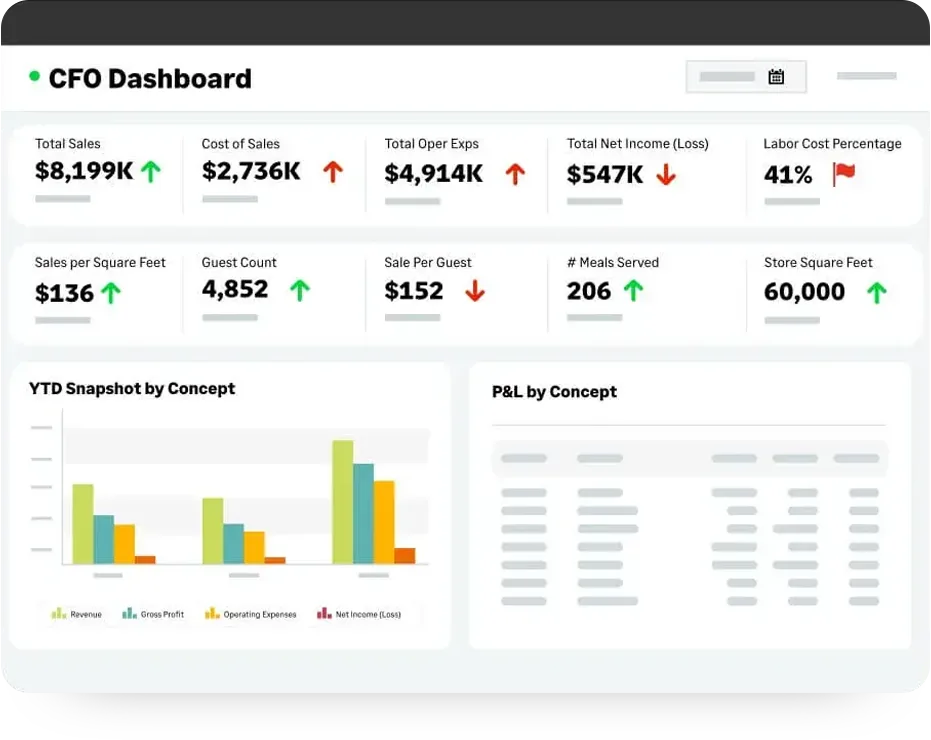
Screenshots throughout are Sage Intacct product material. The figures shown in them are Sage’s demonstration data, not Lucentive client results.
What home services businesses actually need from HVAC accounting software
You need a ledger that can carry operational context. Cost and revenue tagged by branch, crew, route, service line and job at the moment they are recorded, so margin by any of those is a filter rather than a rebuild. Everything else on the feature list matters less than that one capability.
This is where the search gets confusing, because field service management software and HVAC accounting software solve different halves of the problem. Field service tools handle scheduling, dispatch, routing, mobile work orders and the technician’s day. They are essential and Sage Intacct does not replace them. Accounting software handles the ledger, payables, receivables, and the reporting that tells you whether the work was profitable. The mistake we see most often is a company buying a field service platform, discovering its accounting module is thin, and bolting a second general ledger onto the business.
The core financials underneath all of this are the ordinary ones: general ledger, accounts payable, accounts receivable and cash management. What makes them useful in this industry is not the modules themselves but how transactions get tagged as they enter. That is the whole design problem, and it is the part nobody quotes on.
Costing work by crew, route and service line
Margin by crew and route comes from dimensions: tags applied to every transaction rather than codes buried in account numbers. Branch, service line, crew, route, job and equipment become attributes on the entry. Once they are there, every question you have ever asked in a spreadsheet becomes a filter on data you already own.
Designing that structure is a business argument disguised as a configuration task, and it is where these projects stall. A pest control company running residential recurring, commercial contracts and one-off remediation needs those as separate service lines, because they have different margin profiles and different labour intensity. An HVAC business has to decide whether install and service are one dimension or two, and whether warranty work is a service line or a cost pool. Nobody can answer those questions for you, and answering them late is expensive because the tagging has to be reworked.
Our guide to how dimensions replace a bloated chart of accounts covers the mechanics. The industry-specific part is this: your dimensions must be things a dispatcher already records. If a dimension only exists in the finance team’s head, it will be blank on half your transactions within three months. Design so the work order carries the tags and the integration passes them through. Techs should never be asked to think about accounting.
Equipment and vehicle costs deserve their own decision. Fleet is a real cost centre in this industry, and whether you track it by vehicle, by crew or as a branch overhead pool changes what your margin numbers mean. Pick one deliberately rather than discovering the choice after go-live.
The dashboards and reports that actually get used
Three views cover most of what a home services leadership team needs: margin by service line and branch, technician utilisation against billable hours, and a live receivables picture. Build those first. Everything else gets requested after go-live, once people know what they want to look at.
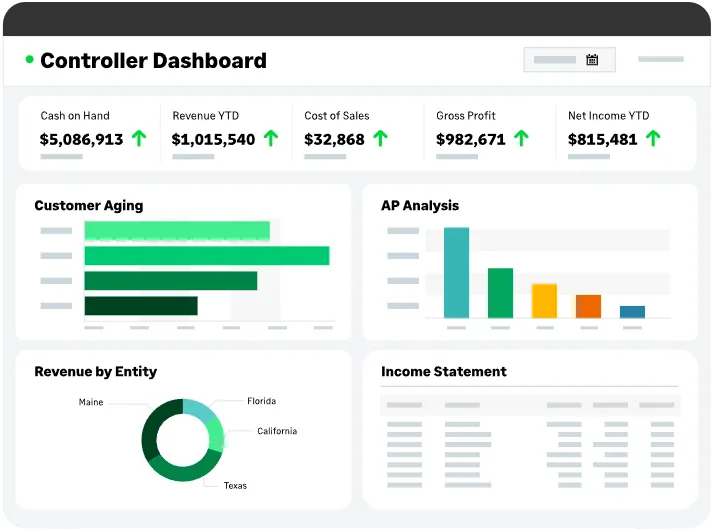
Utilisation is the number that changes behaviour fastest in this industry, and it is also the one most likely to be wrong at first. Whether you count drive time as billable, how you treat callbacks, and what you do with training hours all change the answer, and every branch manager will have a different assumption. Write the definition down before you build the report, then hold the line on it. A utilisation number that means three different things in three branches is worse than not having one.
Compliance and safety reporting sits in the same family. Licence expiry, certification tracking and the operating costs attached to compliance are things you can hold against a dimension and report on, which turns an annual scramble into a monthly view. Our note on using data proactively rather than reactively with KPIs covers how to choose which numbers deserve a dashboard tile.
Budgeting and planning around a season
Seasonality is the planning problem in this industry. An HVAC business does not have twelve equal months and neither does lawn care. A budget built once in January and compared to actuals all year tells you almost nothing useful by June, because the variance you are looking at is mostly weather.
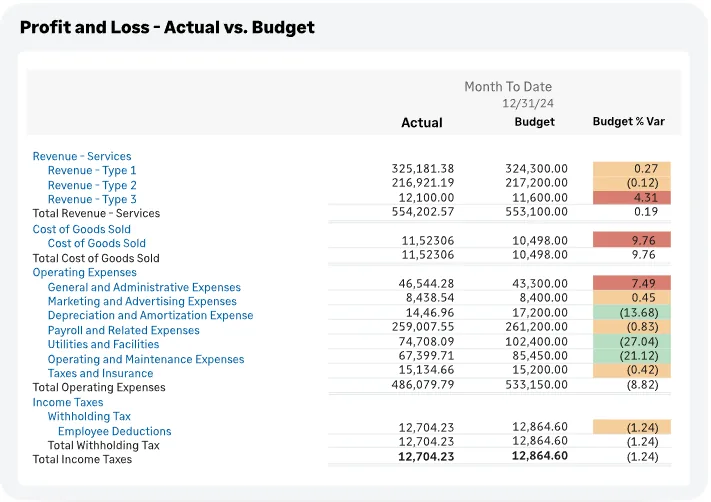
What works better is a rolling forecast tied to the drivers you actually control: crew count, capacity by branch, contract renewals and average ticket by service line. When those live in a planning tool connected to the ledger rather than in a spreadsheet somebody owns personally, re-forecasting after a bad quarter takes an afternoon instead of two weeks. Our overview of moving off the spreadsheet without losing the model goes through how that transition usually runs.
The honest caveat: planning tools do not improve your forecast accuracy on their own. They remove the mechanical work so your team has time to think about assumptions. If nobody has time to revisit assumptions, you have bought a faster way to be wrong.
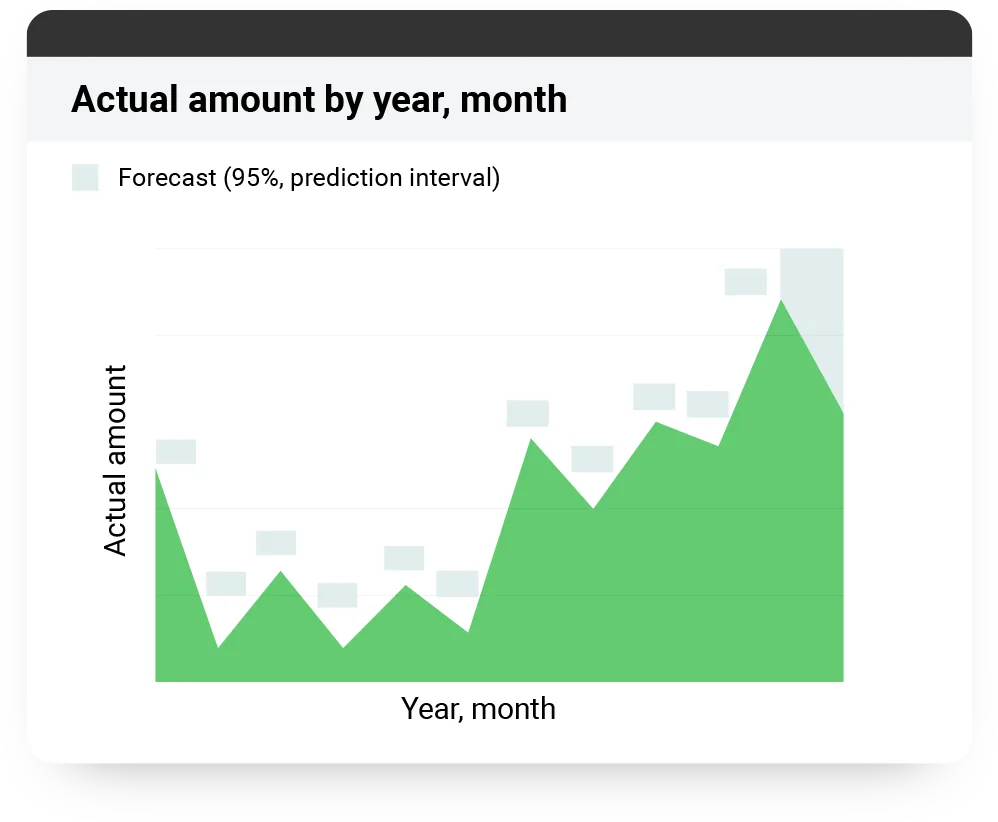
Where a planning tool does help is in showing the shape of the year rather than a single line. Plot two or three seasons of actuals and the peaks and troughs stop reading as variance and start reading as a pattern you can staff against.
Platform, integrations and extended capabilities
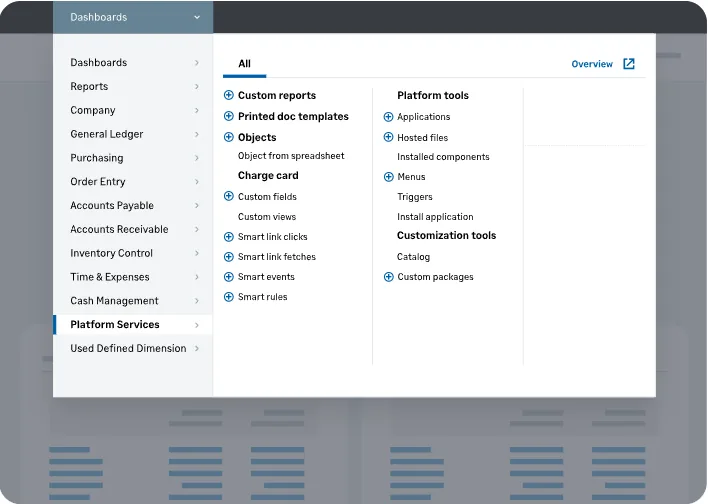
The ledger is one part of the stack. Around it sit your field service system, payroll, a fleet or telematics tool, a payment processor and often a CRM. Sage Intacct provides a published API, a marketplace of prebuilt connectors and platform services for building custom objects and fields where nothing standard fits.
Those extended and additional capabilities are genuinely useful, and they are also where scope quietly expands. Every custom object someone builds is something a person has to maintain through quarterly platform releases. We push clients to solve problems with standard configuration first and to reserve customisation for the two or three things that are genuinely specific to how they operate.
The integration between dispatch and the ledger is the connection that decides whether this project succeeds. Test it against a real month of your work orders before anyone commits to a go-live date. “There is a connector” and “the connector carries your job, crew and service-line tags correctly” are different statements, and the difference is usually discovered in week ten.
What the implementation actually takes
Four workstreams run at once: dimension design, data migration, the field service integration, and rebuilding approvals and access. Configuration is the smallest of them. The heaviest lifting sits on your side and needs an operations lead, not only finance. The stalls are almost always definitional, not technical, and they happen in the first month.
The single most common one is that operations and finance have never agreed on what a job is. Operations counts a job as a visit; finance counts it as a contract; the customer thinks it is a property. Until one definition wins, your dimension structure cannot be built. Sage Intacct helps home services businesses report the way they actually run, but only after somebody decides how they actually run.
Data migration is smaller than people fear and messier than they hope. You move open balances, customer and vendor masters, open receivables and payables, and a defined window of history. The mess is in the customer list: the same property under three spellings, commercial accounts with inconsistent parent-child structure, and inactive records nobody will declare dead. That cleanup is client work and it is the most common reason a go-live date moves.
[DATA: Lucentive’s typical implementation timeline for a multi-branch home services business — Rich to confirm]
One last note on evaluation. The resources for home services on most vendor sites are a gated analyst report, a white paper and an infographic, and all three exist to capture your details and start a sales sequence. Read them if you want. Then ask a partner for something more useful: a written assessment of how your branch and service-line structure would be modelled, and what the platform handles badly for a company shaped like yours.
Summary
Home services accounting is not hard because the transactions are complicated. It is hard because the operational context that makes a number meaningful lives in a different system from the number. Fixing that is a design exercise: decide what a job is, decide which dimensions you will hold every transaction against, and make sure those tags arrive from the work order rather than from someone’s memory at month-end.
Get that right and margin by crew, route, branch and service line stops being a monthly project and becomes a filter. Get it wrong and you have bought a more expensive way to run the same spreadsheet. If you want a straight answer about which of those you are heading for, talk to Lucentive and bring last month’s job list.
Frequently Asked Questions
What is the best accounting software for HVAC companies?
There is no single best, and the honest answer depends on how many branches and service lines you run. If you have one location and simple reporting, small-business accounting software plus a field service tool is usually enough. If you have several branches, mixed service lines and you need margin by crew or route, you need a ledger that supports dimensional reporting, which is where platforms like Sage Intacct fit.
Do I need field service management software as well?
Almost certainly yes. Scheduling, dispatch, routing and the mobile technician experience are a different problem from accounting, and general financial platforms do not do them well. Plan for two systems and an integration between them, then spend your evaluation effort on how cleanly job, crew and service-line data crosses that boundary. That handoff, not either product’s feature list, determines what your reporting can do.
How does pest control accounting differ from HVAC accounting?
The ledger mechanics are the same; the revenue shape is not. Pest control skews toward recurring contracts and route density, so deferred revenue, renewal tracking and cost per stop matter most. HVAC mixes high-value installs with service calls and warranty work, so job costing and warranty cost pools dominate. That difference shows up entirely in dimension design and reporting, not in which modules you license.
Can I track profitability by technician?
Yes, if you decide early that technician or crew is a dimension and your work orders carry it. The harder question is what you do with the number. Technician margin is affected by job mix, territory and dispatch decisions the technician does not control, so it works well as an operational signal and badly as a performance score. Agree on that framing before you publish the report.
How long does an implementation take for a multi-branch operation?
The driver is not headcount. It is how many branches and service lines you run, how clean your customer list is, and how quickly leadership settles the definition of a job. A single-branch company with tidy data moves quickly. A multi-branch group with duplicate customer records and an unresolved job definition takes considerably longer, and the extra time goes to decisions rather than software.